IP camera system wiring options
With a PoE injector
This solution with a PoE injector is used when you require separate power for the camera.

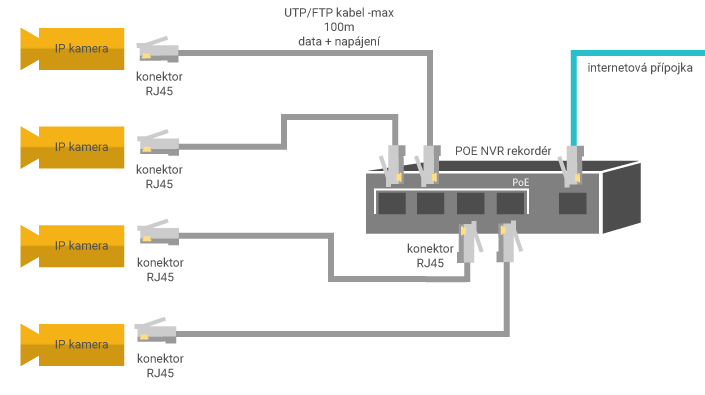
With a PoE recorder
Using a PoE recorder is the simplest way to wire and power an IP camera system over a single cable.
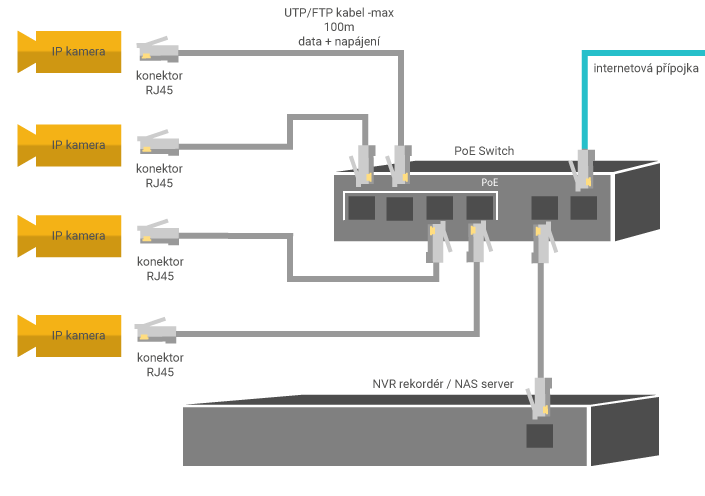
With a PoE switch
This option is suitable when the recorder is placed away from the camera cabling. You can also handle camera power and data aggregation, for example in the loft of the building, and only run a single patch cable down (e.g. due to little space in the conduit) to the shared LAN. The recorder can then be connected anywhere on the same LAN.
WiFi network for outdoor IP camera coverage
IP camera systems offer enormous transmission flexibility, including wireless. You can mix wired and wireless cameras or insert a wireless link between wired sections — covering virtually any security need. Below are just a few examples of what an IP system can be built into.
Wireless cameras for the garage and beyond
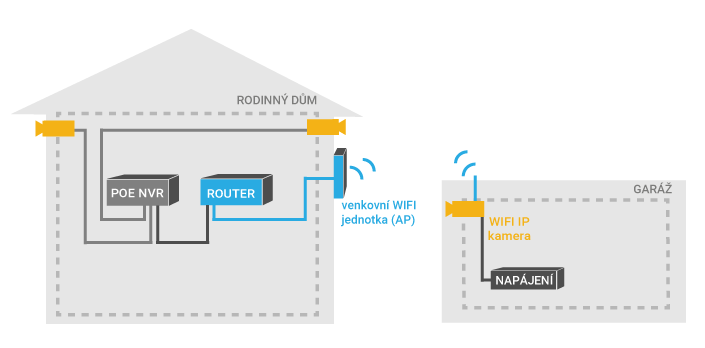
If you buy a wireless camera for monitoring more remote spaces, you can place it where it has good signal to your home WiFi. If that's not possible, an outdoor WiFi unit can be used to create a dedicated network for the cameras.
Example: I've wired the cameras around the house — that wasn't a problem. But I also want to monitor the garage 30 m from the house. The home WiFi clearly isn't enough, so I need to link the existing camera/recorder network with the garage. The ideal solution is to wire an outdoor WiFi unit that creates a new WiFi network for the cameras with sufficient signal strength and coverage. From the garage I'll then power the WiFi cameras. Everything is connected to a single network.
Wireless link for longer distances
If you have two locations hundreds of metres apart with line of sight, digging a cable run is not realistic. The answer is a wireless link that reliably connects the two sites. The link is pre-configured and essentially replaces a cable — it works as if you had pulled copper or fibre.
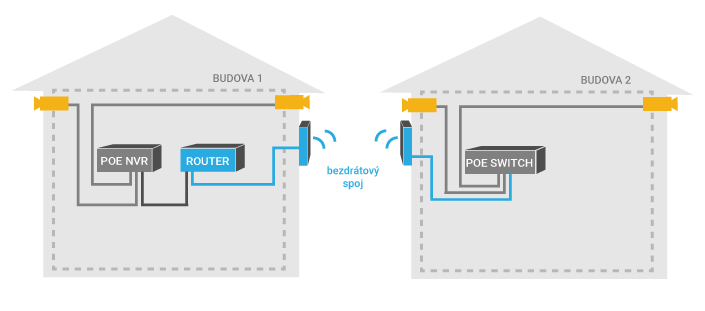
Example: I have two buildings 200 m apart. Both need camera-system monitoring. The first building has the recorder and several IP cameras connected by copper cabling.
In the second building I'll build practically the same camera system with a few differences: no router or AP needed; the system is connected via a PoE switch directly to the wireless-link unit. In the first building I plug a wireless-link unit into the router that connects the second building to the first. After configuration the second building becomes part of the same network used by the entire camera system.