Camera system resolution is measured in pixels (megapixels) — the number of individual dots that make up the image. The table below lists the most common resolutions, their designations and actual horizontal and vertical pixel values.
| Resolution in megapixels | Resolution in pixels | Common name | Numeric label | Aspect ratio |
| 1.0 Mpx | 1080 × 960 px | 1080N | 4:3 | |
| 1.0 Mpx (1.3 Mpx) | 1280 × 720 px | HD | 720p | 16:9 (widescreen) |
| 2.0 Mpx | 1920 × 1080 px | Full HD | 1080p | 16:9 (widescreen) |
| 3.0 Mpx | 2048 × 1536 px | QXGA | 4:3 | |
| 4.0 Mpx | 2560 × 1440 px | WQHD | 16:9 (widescreen) | |
| 5.0 Mpx | 2592 × 1944 px | 4:3 | ||
| 6.0 Mpx | 3096 × 2080 px | 16:9 (widescreen) | ||
| 8.0 Mpx | 3840 × 2160 px | UHD | 4K | 16:9 (widescreen) |
Comparison of Camera System Resolutions
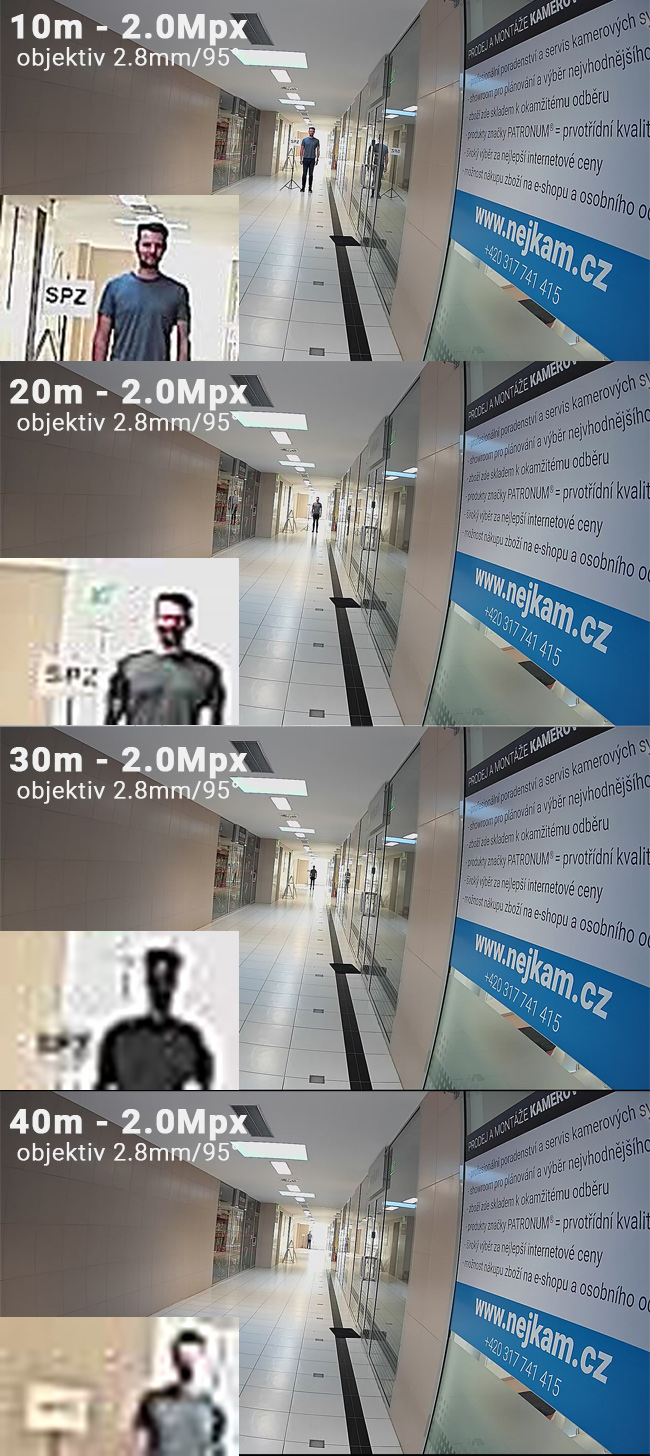
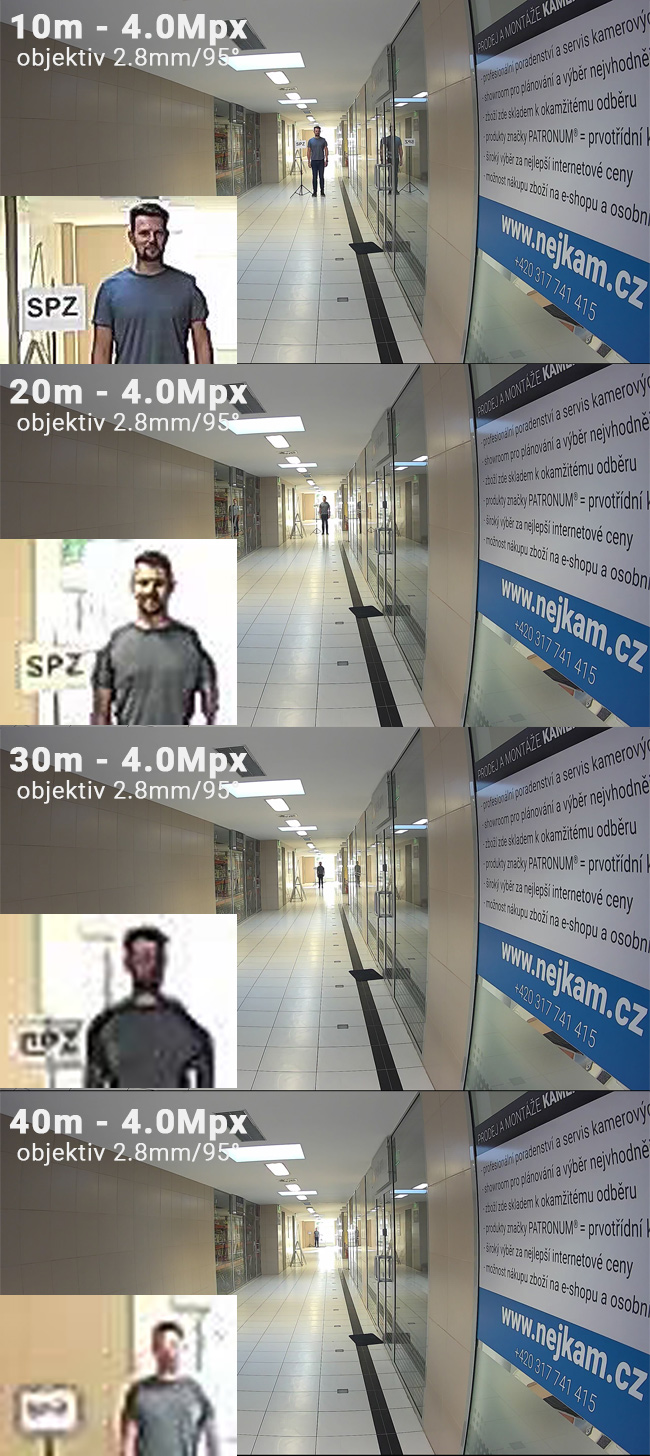
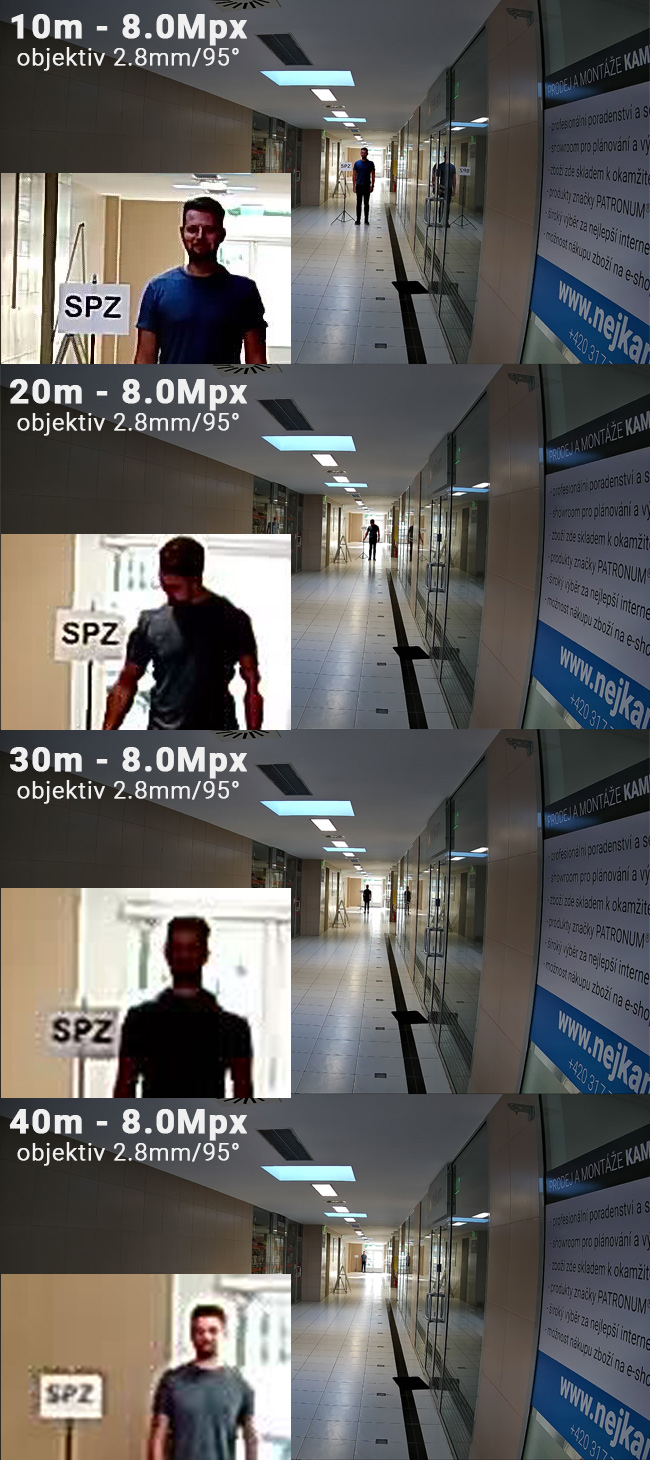
Because we are often asked which resolution to choose, we have prepared a series of tests and comparisons of individual resolutions by distance, as well as comparisons of differences between lenses. In the images below you can see car license plate text size and face recognition with digital zoom at distances from 10 to 40 m using a wide 2.8 mm lens with a 95° field of view.
Sample from a 2.0 Mpx camera
Sample from a 4.0 Mpx camera
Sample from an 8.0 Mpx camera
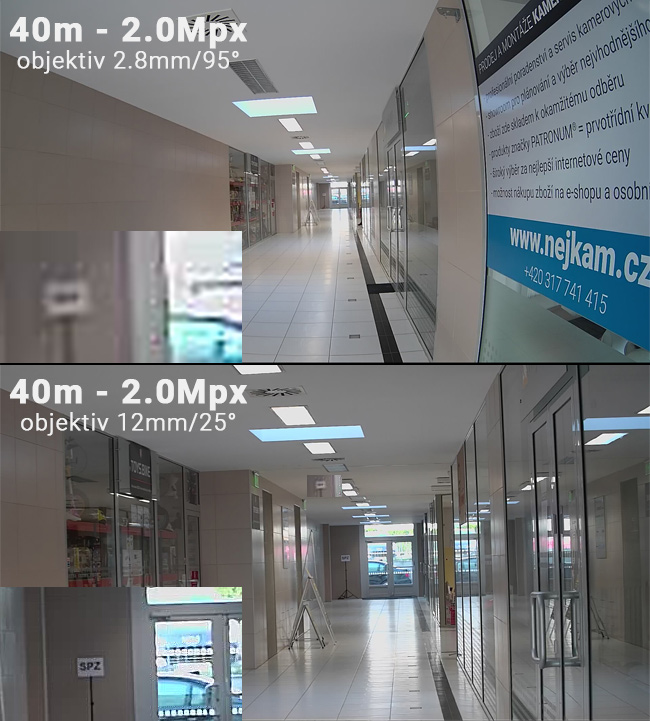
Differences in 2.0 Mpx resolution with a varifocal lens
The image below clearly shows how important choosing the right lens is — or a camera with a varifocal lens — even at lower resolutions. From a greater distance, you can capture detailed shots, for example of a vehicle license plate.