Area intrusion detection in AI camera systems is a feature that automatically detects unauthorised entry into a pre-defined area. It relies on algorithms able to analyse the image and distinguish between people, vehicles and other objects such as animals or trees.

Benefits of area intrusion detection
- Higher security: intrusion detection lets you raise the alarm in time about unauthorised entry into a protected space, helping prevent theft and vandalism.
- Fewer false alarms: unlike traditional motion detectors that react to any motion in the frame, intrusion detection eliminates false alarms caused by animals, branches or shadows.
- Higher monitoring efficiency: intrusion detection lets operators watch only relevant events, reducing fatigue and improving efficiency.
How area intrusion detection works
- Defining the area: the operator defines the area in the image where entry is forbidden.
- Image analysis: algorithms analyse the image and look for people, vehicles or other objects in the defined area.
- Intrusion detection: if the algorithms detect an object in the defined area, the system sends an alert, starts recording or takes other actions such as triggering an alarm.
Types of area intrusion detection
- Person intrusion detection: the system detects people who entered the defined area.
- Vehicle intrusion detection: the system detects vehicles that entered the defined area.
Area intrusion detection is a valuable feature that improves security, reduces false alarms and enables more efficient monitoring.
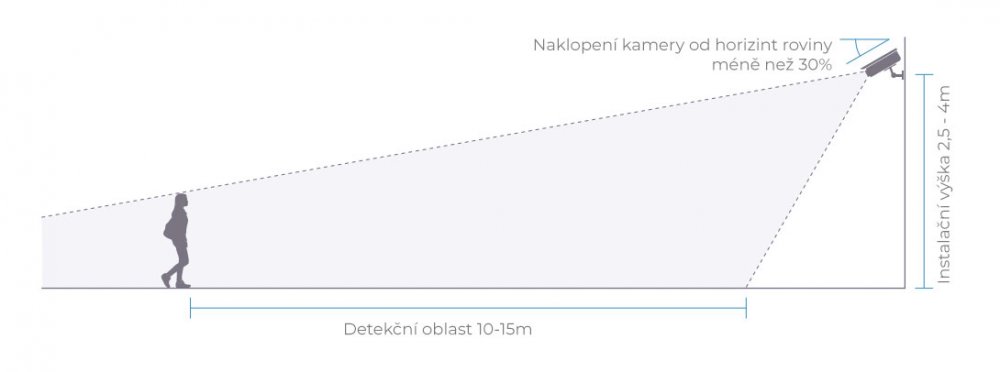
Conditions for proper detection
The security camera must be at 2–4 m height. Tilt to horizontal must not exceed 30°. Detection range is 10–15 m. There must be no objects between the person/vehicle and the camera blocking the view. Failing these conditions can lead to incorrect detection.